

Custom-made orthotics (foot orthoses)
-
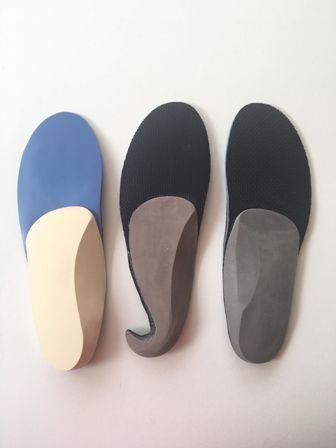
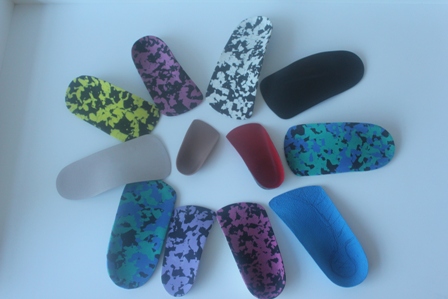
- CFA’s (Custom Foot Adjusted) orthotics (Semi-custom made foot orthosis)
-
- Pre-fabricated or "Off-shelf" orthotics
-
- Available in different firmness/density:
-
- Flexible/ Semi-flexible
-
- Rigid / Semi-rigid
-
- Soft EVA orthotics - different densities: ●Soft ●Medium ●Firm
-
- Insoles with metatarsal supports (for pain in ball of foot/metatarsalgia) - To redistribute weight/pressure from painful sites



-
- These are the most expensive type of orthotics and are made from an accurate measurement of your feet, in the form of either plaster casts or a scan.
-
- the life span of custom - made orthotics is approximately 3 - 5 years, but this will vary according to several factors (eg. activity level; type of material used; increase in body weight). Some people attend the clinic and have had their current pairs for 5-10 years.
-
- Choice of colour can be made for covering materials, as well as choice of different covering materials (Podiatrist will guide you with the different covering materials.)
-
Covering Materials
- -PPT (1.5mm or 3mm)
- -Poron (1.5mm or 3mm)
- -Poron dual layer
- -Neoprene
- -Lunasoft
- -Leather
- -Vinyl
- - Certain covering materials will incur an additional fee, and vary whether a standard ¾ or full length (See list of covering materials)
Semi-Custom orthotics (orthoses)
These are the next level up and are more expensive than the pre-fabricated orthotics (but not as expensive as custom-made orthotics.)
-
- A template is taken of your feet. Whilst standing on a piece of paper from prescription pad, a line is drawn around your feet to enable the correct sizing of orthotics.
-
- These orthotics are not made according to your feet, but your feet are matched up to the correct size orthotics and modified. (Sizing includes: X/Small; Small; Small/Med; Med; Med/Large; X/Large). Orthotics are then adjusted according to the prescription and covered with suitable material according to your requirements.
-
- Your left and right foot are not identical, therefore modifications may be required. ( A fee may, at times, be charged for modifications) The laboratory captures a tracing of the outlines of your feet, whilst you are in a weight-bearing position, but has no idea of the height of your arches.
-
- These types of devices offer sufficient support and control and are often used successfully with the growing child, often replaced 12-18 months, or as the feet grow.
-
- These devices usually take around 5 working days to be manufactured at the laboratory and are then returned via courier to th
- ng materials will incur an additional fee, and vary whether a standard ¾ or full length (See list of covering materials)
Pre-Fabricated orthotics (orthoses)
-
- May also be referred to as OTC (Over The Counter) orthotics.
-
- These are the cheapest type of foot orthotic.
-
- These devices come in various sizes (X/Sml - Sml - Med - Large - X/Large). They are manufactured out of a variety of different materials and designed to accommodate different footwear, activities and foot types. Additions to these orthoses will incur additional costs. Unfortunately it may be difficult to modify/adjust some of these types of devices.
-
- Available in standard 3/4 and full length.
-
- Certain foot-types may not be suitable for these devices.
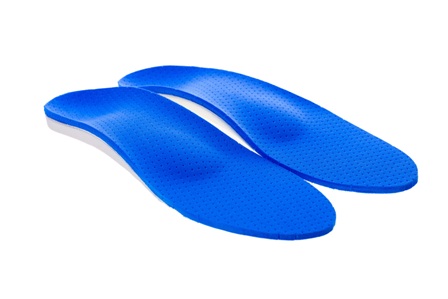
Insoles
- Insoles with metatarsal supports (for pain in ball of foot/metatarsalgia) - To redistribute weight/pressure from painful sites.
- Offloading from painful corns/calluses and ulcers.
Full Inserts/raises for limb Length Discrepancies
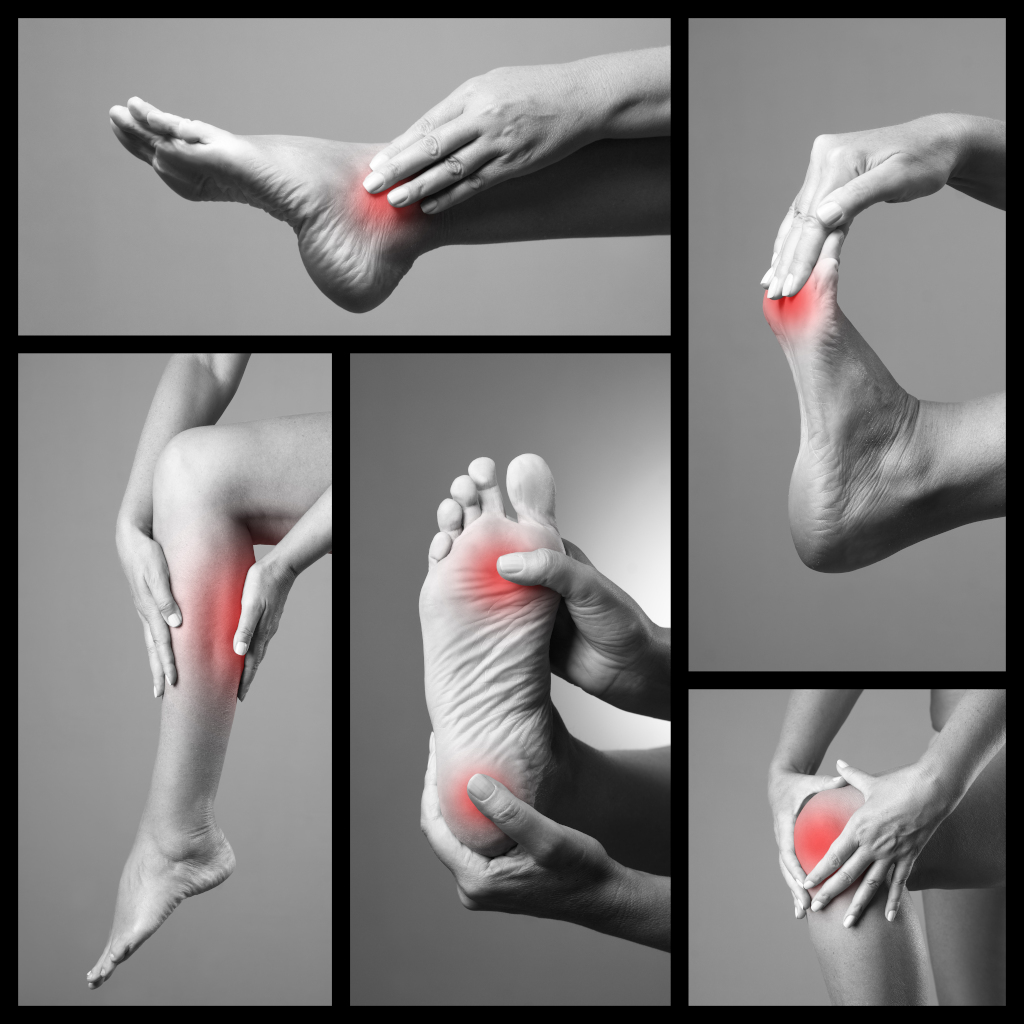
Depending on the leg length difference, a full raise may be inserted into existing footwear. This would depend on the type of footwear and the amount of depth within. If a leg has a 1.2cm
difference, a raise will be made for approx. 1cm. For example, the heel region would be 1cm which would then taper into a 0.5cm in the forefoot region. If a raise cannot be accommodated within footwear, arrangement can be made for it to be added externally.